
TL;DR / Key Takeaways
Plantar fasciitis is degeneration, not inflammation - it happens when our foot muscles are overloaded so you can tackle it by reducing the loads or by strengthening the muscles or both. There are ~9 super common causes, often combined. Expect complete healing to take months, not weeks.
Ugh. Plantar fasciitis can be one of the most stubborn and frustrating foot issues.
It’s bad enough to feel like you’re walking on broken glass when you get out of bed in the morning.
And that you’ve already tried Shockwave and orthotics and cortisone shots but none of them helped.
But then to add insult to injury, it’s so confusing. Some people say stretching helps, others say you need to roll on ice bottles, and still others tell you to cut out the sugar. Some people heal by going barefoot and others swear by their Hokas. What gives?
Quick bit of background on me: I had plantar fasciitis, I did the Shockwave, I did the orthotics, I did the dry needling. None of it helped. But in the end - I figured it out. 12+ years later, I now teach the same strategies for foot health that rescued my own feet.
Spoiler alert: it’s not because one single ‘magic’ exercise can change things for everyone. But there is a path forward to permanent plantar fasciitis relief.
So in this post, I’m going to explain why it’s all such a mess - and how to troubleshoot so you can resolve your plantar fasciitis for once and for all
But first - one quick thing before we go on - try this right now. Sitting or standing, can you lift just your big toe off the floor without moving the rest of your foot? Now just the four little ones, keeping the big toe down? If that feels weirdly impossible - or your toes all come along for the ride whether you want them to or not - that’s your first clue. We'll come back to it.
What plantar fasciitis actually is
At its root, plantar fasciitis is kind of simple. Your feet are made of layers of different tissues - bone, muscle and connective tissue including the plantar fascia. All of these tissues are supposed to share the load of moving your body around the world. But if your muscle layer is weak, the plantar fascia has to do extra work. Over time, it breaks down and creates the pain and discomfort we call plantar fasciitis.
When your foot muscles can’t handle the load, your plantar fascia picks up the slack. That’s the whole problem.
Typical symptoms are heel pain, especially when first getting out of bed in the morning. Usually it’s the front inner part of the heel (where the fascia attaches), and the pain is often sharp, stabbing and ‘feels like walking on broken glass’. It often goes away with some movement and then comes back again later. Please note though - not all heel pain is plantar fasciitis and it’s worth getting a clinical diagnosis so you can get the right treatment!
Quick note: except in the early phases, plantar fasciitis is not inflammation - research shows that it’s actually degeneration. This means it’s a bit like a tendinopathy where the tissue actually becomes disorganized. This means you can skip rolling on frozen bottles (unless it feels nice). It also explains why it can take a long time to heal - connective tissue turns over very slowly - think months, not weeks.
So if you've been icing your foot for months and wondering why nothing's changing - this is why.
The main takeaway here: you're going to need your foot muscles to be able to take on their share of the work. That might mean you need stronger foot muscles, it might mean you need less work. It might mean a bit of both.
The missing step: find your cause before you treat
So here’s the thing - plantar fasciitis happens when the loads are too high for the tissues of your foot to handle.
But what most people don’t discuss is that there are many reasons your foot muscles might be overloaded.
In my 12 years of coaching movement, there are 9 reasons that come up most when I’m helping people resolve plantar fasciitis. Your plantar fasciitis was likely triggered by at least one of these - or many of them.
So the missing step to a permanent fix is to figure out why your plantar fasciitis is happening, and that will give you a path forward. Start by looking at these causes and see if you can spot the ones that apply to you!
(I had plantar fasciitis when I started my own movement journey. And I had 5 of these reasons going on in my body. As I resolved these functional issues, guess what? My pain melted away - and I haven’t had any plantar fasciitis since that time, over 12 years ago).
Pain isn’t only mechanical
Quick reminder before we start - our bodies aren’t machines and pain is really complex. We typically feel pain when our brains sense high levels of threat - and that can happen because of many things. Including your sleep, work stress, relationship issues, financial problems, nutrition, old injuries, or world events right now. Finding ways to manage stressors could be very helpful - meditation (I use and love the app, The Way), breathwork or resources like the Curable app are all great options.
The 9-Point Foot Check (how to spot yours)
You don't need a cookie cutter ‘solution’ - you need the specific answers that meet your own unique needs.
There are probably more than 9 reasons for plantar fasciitis, but these are the ones I see most often.
So grab a pen and paper and work through my 9-Point Foot Check to see what's likely the reason for YOUR plantar fasciitis.
And yes, you can check off more than one.
Weak intrinsic foot muscles
You won’t be surprised to learn that simply having weak, underused foot muscles is part of the picture here. Most of us have pretty weak feet.
Why do our feet get weak? Mostly our footwear. Conventional shoes are very stiff and cushioned - and this actually immobilizes our feet. Even though we walk on them all day, the muscles in our feet get very weak and deconditioned. Because most of us wear shoes from shoe stores, weak foot muscles are part of the story in most cases of plantar fasciitis.
Test yourself: Can you lift up your big toes by themselves? Then the little toes? If not, then you’re missing some neurological connection with those little muscles in your feet (and that means those little foot muscles are weak and underused).
Remember the toe lifts we tried at the start? This is why they matter.
→ If you struggled with the toe lifts, then you can bet that foot muscle weakness is playing a part in your plantar fasciitis.
The fix: Build your foot muscle strength. Start by getting good at toe lifts - they’re a surprisingly good starting point! In fact, this is one of the foundational foot exercises in my Free Your Feet program.
(This was one of my 5 issues - it took me months to get my toes moving on their own but i did it eventually)
Forefoot loading — hips forward / heeled shoes
Here’s the thing. When we stand, many of us push our pelvis forward instead of standing with our weight vertical. This uses less energy and muscle than standing vertically - but it also puts a huge load on the small muscles of our feet (it makes our butts flat too, but that’s another story).
This is actually what triggered my own case of stubborn plantar fasciitis. I got a standing desk at work and next thing I knew, heel pain in the morning! And it may be the most under-diagnosed reason for plantar fasciitis - this one is huge!
Test yourself: Grab yourself a mirror and a piece of string and follow this video to check if your default standing pattern is hips forward.
→ If you found you stand with your hips forward, it could definitely be part of your plantar fasciitis. This is a really common movement habit and plays into a lot of foot issues!
The fix: Start wearing flatter shoes (less heel rise or no heel rise) and practice standing with your weight closer to your heels. Take this slowly - going too fast can trigger a flare up for some people.
P.S. Working on this can also help with pelvic floor problems - how cool is that?
Limited ankle dorsiflexion → alters gait
When we walk, our pelvis and back leg should move forward before our back foot leaves the ground. This means we need to bend at the back ankle to allow the leg to move ahead. This movement is called dorsiflexion.
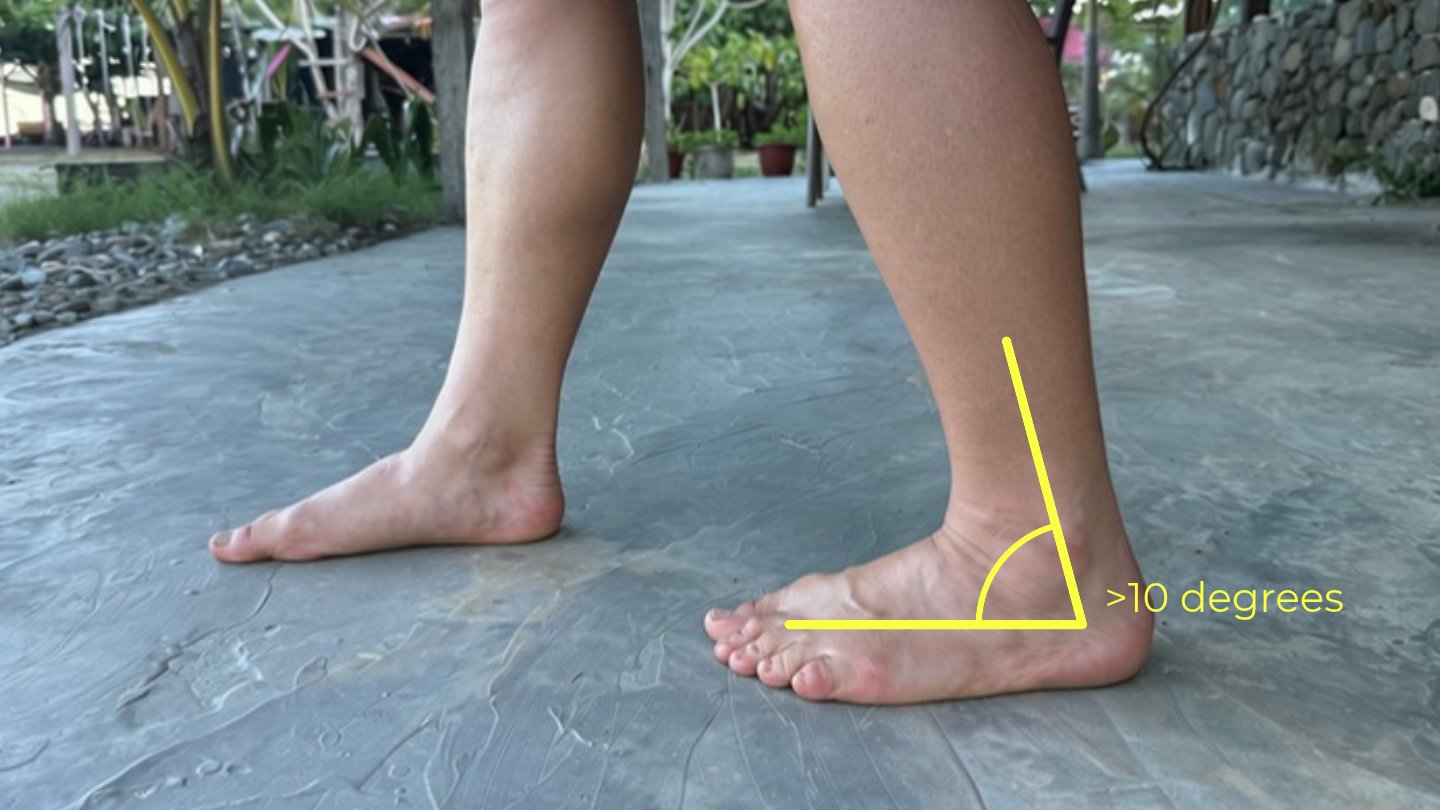
But when your ankle can’t move well, something has to change. Often, the foot bones will compensate for a stiff ankle. The ankle will buckle inwards and the foot bones will drop or ‘overpronate’ to allow your leg to move forward. And that puts pressure on the bottoms of your feet and your plantar fascia.
Test yourself: Grab a rolled up yoga mat and try this calf stretch - how does it feel?
→ If your calves feel super tight, or if you feel like you might fall backwards, then your calves need more length!
The fix: Start wearing flatter shoes (less heel rise or no heel rise) and work on your calf length and strength. This calf stretch is a great starting point but for best results, make calf raises a priority (I share my favourite starter calf raise options in my $17 USD Free Your Feet program if you want some guidance).
Fun fact: Your ankles might not flex for two main reasons - either the ankle joint itself is limited or your calf muscles don’t lengthen well. If it’s your calf muscles, that means they’re also constantly pulling on your plantar fascia - another possible overload.
Tight hamstrings → alters gait
Tight or short hamstrings (the big muscles at the backs of the legs) also change how you walk, preventing your front knee from fully straightening. This forces you forward on the fronts of your feet as you walk. And you guessed it - this puts extra load on the plantar fascia.
Test yourself: Can you hinge at your hips to about 90 degrees without bending your knees or your spine. Most people cheat without knowing it - so film yourself or do it in a mirror!
→ The more limited you are (the earlier you bend your spine or simply can’t go any further) the more likely that tight hamstrings are part of the reason for your plantar fasciitis.
The fix: Start wearing flatter shoes (less heel rise or no heel rise) and work on your hamstring length and strength. Simply doing lots & lots of hip hinges will be a great start!
P.S. Tight hamstrings often go with hips forward standing and tight calves - the backs of your legs will help with all three!
Banana shaped feet → pulls on plantar fascia
I wasn’t sure how to describe this one but it’s super common, again because of modern footwear.
Here’s the deal. Conventional shoes have a lift in the front of the foot (as well as the heel). It’s called toe spring, and it’s there so we don’t stumble over the thick rigid soles of our shoes when we walk.
Which is great - except that over time, our feet adapt to this banana-like shape. The stuff on the top of our feet gets short, and that pulls constantly on the stuff on the bottoms of our feet. Yes, including the plantar fascia.
Not only can this trigger plantar fasciitis, it can also contribute to hammertoes, fat pad thinning and metatarsalgia. Just sayin’.
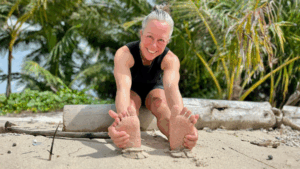
Test yourself: Take a look at my right foot in the image below and compare it to your own feet when they’re relaxed out in front of you. Is there a ‘scoop’ over your toe knuckles? Do your toes project upwards instead of extending out flat?
→ If your feet look like my right foot when they’re resting, you’ve got some banana shape going on. See how the area near my toes is caving in?
The fix: Stretch out the tops of your feet often, and embrace exercises that help restore your toe knuckles, such as picking up a hacky sack or a ball of socks with your foot.
Overpronation / poor arch control → pressure into fascia
Pronation is often misunderstood - we actually need our feet to pronate. Technically, pronation is a natural ‘untwisting’ of the midfoot that’s essential to help absorb shock when we walk.
But pronation should be a controlled movement pattern, that lowers the midfoot then allows the foot to spring back up into supination - the ‘twisted’ position of the foot.
When we lose the ability to control pronation (often because our feet are stiff & weak or we’re lacking hip mobility), we get ‘overpronation’.
This can mean that you collapse down into your arch on each step. Or that you’re constantly down in that collapsed, untwisted foot position, with your ankles caving in and your feet turned out, mashing pressure into your inner arches.
Either way, that’s a lot of pressure on your plantar fascia.
Test yourself: Get a picture of your feet from the back and from a 45 degree angle in the front.
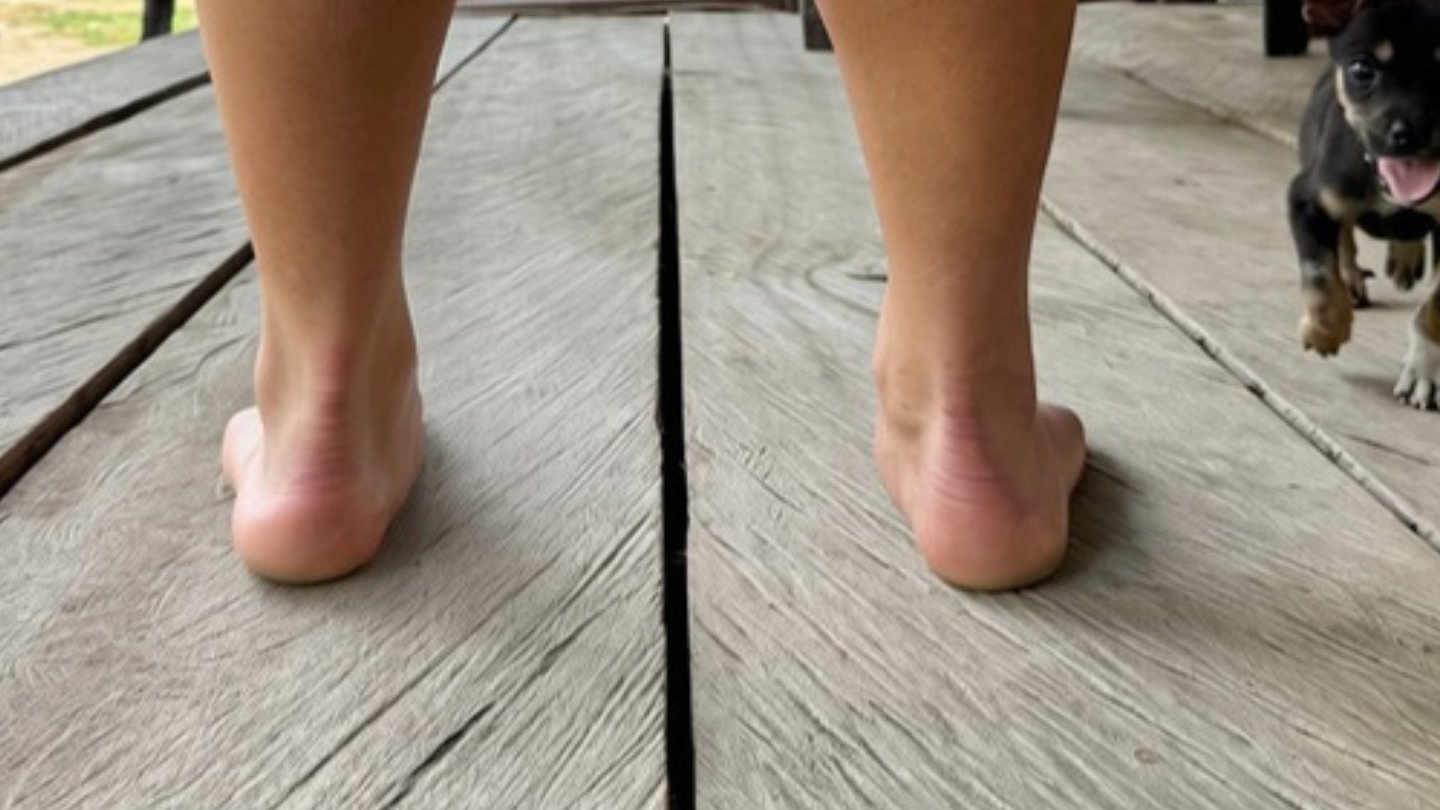
→ If your ankles curve in and your arches are flattened down, you can suspect that overpronation may be a reason for your plantar fasciitis.
The fix: Build your foot strength, mobilize your feet (stiff feet can drag you into pronation), and build your hip rotation mobility. (Been told you ‘need’ arch support? Think again - barefoot shoes with flexible soles can be great for you by the way - they help you build strength & mobility - but I’d start with lots of exercises first).
Limited big toe mobility → alters gait
Big toe mobility is a big deal for our bodies. For efficient walking, our big toes should be able to bend backwards (extend) to about 45-60 degrees. And they should splay straight out from the foot bones instead of being squashed inwards (like a bunion).
When the big toe can’t extend, our walking stride gets shorter or we sort of rotate and smear out around the big toe instead of rolling straight over it. Not only does this overload the plantar fascia but this smearing is also one of the culprits behind bunions.
No surprise that bunions and plantar fasciitis often go together!
Test yourself: Lift all your toes and notice - how high can you lift your big toe? Ideally you need about 45-65 degrees of range as you walk. Does your big toe lift straight up? Does your big toe point straight out from its foot bone or does it veer off towards the other toes? Do you have a bunion? This isn’t about just lifting the toe - this is how it lifts - and how far it goes.
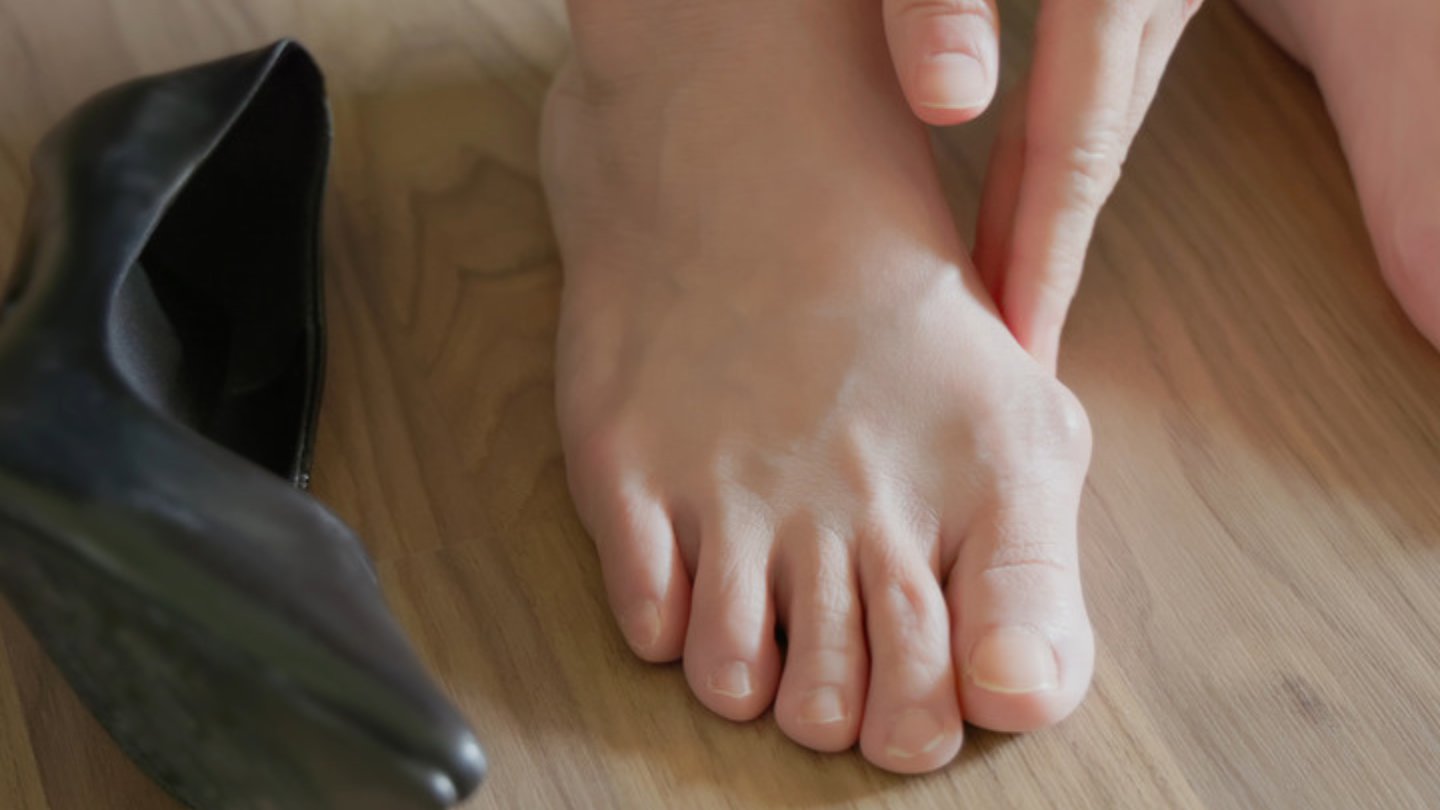
→If you have a visible bunion, you can’t lift very far or your toe won’t lift (or sit) straight, suspect that big toe mobility and alignment lie behind your plantar fasciitis.
The fix: Prioritize big toe mobility, alignment and control. When you do your big toe lifts, focus on getting your big toe to lift up straight instead of veering in. Yes, I know how hard it is - but you can do it! Toe spacers could be a big help also - here’s a post I wrote with more info.
Fun fact: When the big toe sits squashed inwards, one of the most important arch muscles (the abductor hallucis) gets weak and overstretched. This muscle is part of how we control pronation - so when it’s weak, we’re more likely to get stuck in ‘overpronation’.
High rigid arches (opposite problem) → mobilise, learn to pronate
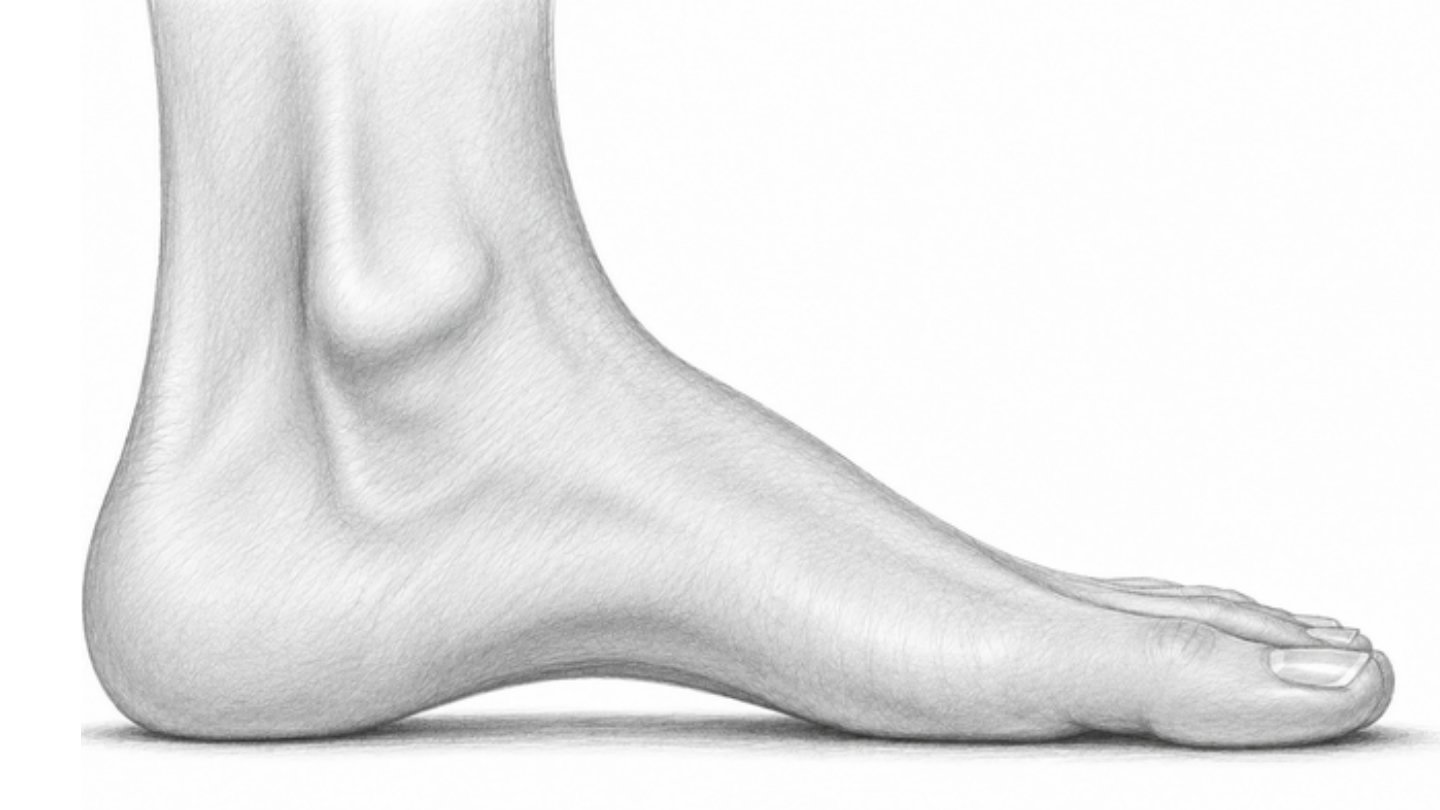
If you have high, stiff arches, you have feet that don’t like to pronate. They get stuck in the rigid twisted ‘supinated’ pattern - and this means they don’t absorb shock very well. Your plantar fascia (and your knees) have to pick up the slack.
→ It’s not wrong to have high arches - but they need to know how to soften!
Test yourself: Have you been told that you supinate, or do you know that you have high arches? Do your feet look like this image?
→ If your arches lift way up off the ground and don’t like to soften, this might be you!
The fix: Focus on foot mobility exercises and learning how to soften through your arch - you can teach your feet how to pronate! (Been told you ‘need’ arch support? Think again - barefoot shoes with flexible soles can be great for you by the way - they help you maintain mobility - but I’d start with lots of mobility exercises first).
Capacity mismatch (feet vs life) → strengthen + manage load spikes
Sometimes overloads aren’t because your feet are weak, exactly.
They happen because your life is really hard on them.
Maybe you’re a nurse or someone who has to spend long days standing on hard floors. Maybe you’re training for an ultramarathon. Or maybe you just switched to barefoot shoes.
Any of these situations can create overloads for your feet. Even strong feet can get worn down by long training days or sudden spikes in loading. And that means the plantar fascia gets overloaded.
And also, let’s mention that both menopause and diabetes can do something similar. When estrogen levels decrease, our connective tissues get less elastic and resilient. When we have diabetes, high blood sugar can bind to collagen fibres, making the plantar fascia more stiff and more likely to get micro-tears. So in these cases the quality of the plantar fascia decreases and what might have been normal loads can become overloads.
Test yourself: Ask yourself if your feet might be getting overloaded because of your daily activities or your current stage of life or state of health.
→ If the answer is yes, check the box!
The fix: If you can, decrease the overloads! If that’s not possible, or even if it is, try footwear that has lots of cushion but also has wide toes and no heel rise (for instance, many nurses I’ve worked with found that Altra runners were great for them). Build foot muscle strength.
(I triggered my own plantar fasciitis by getting a standing desk at work. Along with my weak foot muscles, forward standing habit, banana-shaped feet and overpronation, it’s not really surprising I ended up with plantar fasciitis)
Your own 9-Point Foot Check
Make a note of each one that fits for you:
1 - Weak foot muscles (couldn't lift those toes?)
2 - You stand with your hips pushed forward
3 - Tight calves / stiff ankles
4 - Tight hamstrings
5 - Banana-shaped feet
6 - Arches that collapse / overpronation
7 - A stiff or crooked big toe (or a bunion)
8 - High, rigid arches
9 - Your life is hard on your feet
Most people check more than one - that's completely normal.
So where do you start?
You’ll probably need to work on everything you checked! But whichever stands out for you most is a good place to begin.
Whichever boxes you checked off, they all come back to the same thing: giving your feet what they need so your plantar fascia doesn’t have to pick up the slack.
My bet is that you will find that building foot strength and mobility is a great place to begin. So is decreasing the most common overloads, like hips pushed forward standing and tight calves.
So, I put my favourite foundational exercises to help tackle the most common root causes of plantar fasciitis into my Free Your Feet program. It’s 7 days of emailed exercises that will help you restore your foot function and beat plantar fasciitis for good - and now that you’re armed with your own personal plantar fasciitis prescription, you already know which ones to focus on! It’s $17, and you keep it for life. Grab it right here.
Frequently asked questions
Why won’t it go away?
You’re probably doing the wrong things - resting, orthotics, cortisone shots or exercises that don’t meet your actual needs are all common reasons that plantar fasciitis sticks around.
Can I go barefoot? Should I switch to barefoot shoes?
This one is very individual.
Because plantar fasciitis is basically an overload issue, and spending time barefoot or in barefoot shoes can be a big load on the feet, it can trigger flare-ups for some people.
But for other people, switching to more barefoot style shoes can be great because it helps build foot strength, decrease overloads on the forefoot and allows the toe muscles to do their job.
Here’s a post about what to look for in foot friendly barefoot style shoes!
Since you can’t know for sure, I’d suggest two options.
First, consider switching to a transitional shoe - with a wide toe box and lots of cushion, and maybe even a heel rise (if your ankles are tight). This will give your feet some room to breathe but will moderate out any possible overloads.
Second, try a small amount (a few minutes) of truly barefoot time around your house or yard, and see how your feet feel the next day. If they feel good, continue slowly adding barefoot time, if they flare, wait a bit longer!
How long will it take to heal?
Time to heal mostly depends on you - why you have it in the first place & what you do to resolve it. I’d expect it to take several months to completely go away simply because it’s a connective tissue disorder and it takes a long time for connective tissue to turn over and heal. It took me several months once I started trying exercise and movement solutions instead of orthotics and Shockwave.
Will stretching alone fix it?
Unlikely but not impossible - it depends on why you’re experiencing it so if it’s just, say, calf and hamstring tension, then stretching could make a big difference. In general, you will also need to strengthen your feet, change how you’re loading your feet, and consider switching to more foot friendly shoes.
Can my shoes cause it?
Yes. Conventional footwear is the main reason that our feet are weak, stiff, and unable to function correctly. Alternatively, switching too fast to minimal footwear or not supporting your transition to minimal footwear by working on your gait and foot mechanics can also trigger an overload (sometimes several years after you first switch shoes). Here’s how to plan your transition.
Does being overweight cause plantar fasciitis?
Weight is one of many things that can add load to your feet, the same way a standing job, a hard training block or a pregnancy can. It’s not about blame, and it’s not the whole story - plenty of people at every size get plantar fasciitis, and plenty of heavier people never do. What matters is the balance between the load your feet are carrying and how well they can handle it. So the path is the same whatever your size: build your feet up, take load off where you can, and support them with foot-friendly shoes. If your feet are carrying a lot right now, they’ll feel the benefit of that strength and that load management all the sooner.
Strengthen or rest?
Often both! Depending on why you have it in the first place, always. Don’t forget that taking time off your feet (‘resting’) isn’t necessarily the same as not exercising your feet. Likewise, being on your feet especially in conventional footwear doesn’t necessarily strengthen your feet. I always recommend starting with my Free Your Feet program because it tackles the most common reasons for plantar fasciitis - so it’s a great way to get started on a real, long term solution!