

I cursed my feet on every step. Every time I kicked at the snow to make sure I didn’t slip down the glacier, my pinky toe screamed at me. Every time I slipped on the loose rocky scree. Every time I stumbled over a tussock and into a hidden hole in the ground. My feet HURT and I knew exactly why: it was the stupid, narrow mountaineering boots.
After 5 months exploring New Zealand, surfing, camping and hiking (or tramping, as they call it here) all over the amazing mountains, we were on our final, dream trip. We’d taken the plunge and splurged on a guided ‘Intro to Mountaineering’ trip up New Zealand’s biggest mountain, Aoraki Mt. Cook.
After a steep hike up through the bush, we’d spent the night before in a rustic mountain hut, decorated with old skis and ice axes, watching avalanches tumble across the Caroline Face as the sun set in a blaze of pink and orange.
And today we were learning basic mountaineering skills. We’d spent an hour or so sliding down a snowy slope learning how to self-arrest a fall by jamming our ice axes into the ice. We’d learned how to fasten crampons onto our boots so we could climb back up again. And we’d walked on narrow, exposed, trackless ridges, getting comfortable with the idea of a 500 metre vertical drop on one side if we missed a step.

And while I did my best not to ruin the trip by whining, I have to confess that I spent a lot of time thinking about the ordeal I was putting my feet through. The pain across my toes made it hard to think about anything else. Visions of bunions and neuromas danced in my head.
Because the thing about most common foot problems is that really, they’re not diseases. They’re just our feet responding to the environment they live in And when that environment is stiff, overly narrow shoes that squash our foot bones – well, we get issues that are the result of being squashed. Such as neuromas – especially Morton’s Neuroma – a super common foot problem that I get asked about All The Time.
And here’s the good news – when we unsquash our feet with exercises, better footwear choices and new body alignment habits, Morton’s Neuroma symptoms (and other ball of foot pain) can be dramatically improved – no surgery required. Here’s what you need to know!!
The diagnosis trap
So here’s what usually happens. You notice that burning, electric feeling in the ball of your foot, the painful feeling of walking on a marble or a pebble that isn’t there. And eventually you see a doctor or a podiatrist. They press on your foot, maybe do an ultrasound, and tell you: it’s a Morton’s neuroma.
They might offer a cortisone injection to calm things down. Or custom orthotics. Or tell you to avoid tight shoes and high heels for a while.
And then you go home with a diagnosis but not much else. You know the name of the thing. You don’t know why you have it, what caused it, or what you can actually do about it. Which is deeply frustrating — because a label without an explanation isn’t really helpful.
I didn’t have a neuroma, but I had my own version of this experience. By the time I was 30, I’d been dealing with chronic plantar fasciitis, shin splints, and numbness for years. A podiatrist told me I’d always need orthotics. That was just how my feet were built.
I kind of assumed I’d inherited a trash pair of feet. Some people get good feet. I didn’t.
But I was wrong.
What’s actually happening
The thing about a Morton’s neuroma is that it’s really a fancy word for a simple mechanical problem. Even though the word ‘neuroma’ typically means tumour, it’s actually a misnomer here – a Morton’s neuroma is actually a compressive neuropathy – aka a compressed nerve.
So the big question is WHY your nerves are getting compressed – and there’s a really easy answer to this. It’s not your DNA, it’s your shoes. Our footwear has been designed for fashion, not for function, so even sensible shoes are damaging our feet (although less sensible shoes like sky high heels are even more problematic).
There are two main issues with our shoes when it comes to neuromas.
First, conventional modern footwear is always narrow at the toes – so narrow that they literally deform our feet by squeezing our toes inwards. Our toes should extend out from our foot bones and should be the widest part of our feet – but the narrow toe boxes of modern shoes don’t allow this natural splay. Instead, they squeeze our toes inwards and over many years, our feet change their shape as a result of this compressive environment.
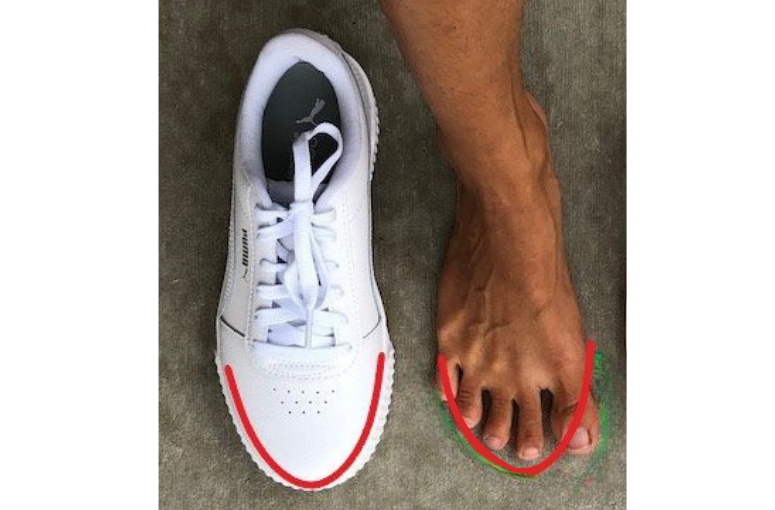
What’s more, modern shoes almost always have at least a little bit of lift in the heel (even comfortable, sensible and casual shoes). This heel lift forces our body weight too far forward on our feet – so the area around our toe bones is constantly overloaded by our body weight as well.
So yes, even the most reasonable conventional shoes have been squashing your toe bones together for many years, and that’s been squashing your nerves.
When a nerve is squashed and compressed all the time, it gets angry (I’d be angry too!). After many years of being compressed, the nerve gets inflamed, and becomes thickened and fibrotic. That nerve pain between your toes is simply your foot’s way of telling you it needs more room.
(There is a genetic side to this – if you happen to have a longer second/third metatarsal you’re more likely to end up with a Morton’s Neuroma – but it’s the combination with the mechanical environment that triggers the issue, not DNA alone. Other people with similar mechanical inputs and different DNA may end up with plantar fasciitis or bunions).
In other words, what’s being called a ‘Morton’s Neuroma’ isn’t really a disease. It’s a symptom – of nerve compression. Decades of being squashed angers the nerves and they get thickened and irritated and so we give it a fancy name but really it’s just that our toes are squashed. Day after day, year after year. So let’s talk about how we can unsquash your toes and give your feet some relief.
Build strong, healthy, pain-free feet – for a lifetime!
3 essential changes to restore your feet
There’s a logical order to this, and it starts with your shoes — because there’s not much point doing exercises to unsquash your toes if your footwear is still squashing them eight hours a day. Once you’ve sorted out the environment your foot is living in, you can start actively restoring function with exercises. And then there are some big picture body alignment habits that also have an impact on how your feet feel.
Your foot’s environment — shoes, toe spacers & thingy-mabobs
Shoes
Since too-narrow shoes cause the problem, you won’t be surprised to hear that you need to get shoes with more room for your toes! You need shoes with wide foot-shaped toe boxes so your toes can spread out again. This is non-negotiable – you can’t expect to unsquash your toes if your shoes keep squeezing them together!
You also need shoes that are totally flat, without any heel rise. When shoes have a lifted heel, they push your body forward all the time – creating tight calves and putting too much weight on the fronts of your feet. And yes, compressing those nerves. Surprisingly, almost all shoes have some degree of lift in the heel – even if it doesn’t look like it. You’ll benefit from switching to ‘zero drop’ shoes that have totally flat soles, which means that your body weight isn’t being pushed forward onto your toe bones.
Although I love barefoot style shoes, they may not be right for you especially if your neuroma is currently painful or irritated. Instead, I suggest you look for shoes with thick, cushioned soles. Because your nerves are irritated, shoes with very thin soles (like most barefoot style brands) can be super uncomfortable.
But you still need wide toe boxes and zero lift at the heel. That means Hokas aren’t going to work – they’re narrow and have raised heels. Instead, look for shoes like Altra Running, Lems or Topos that are considered ‘transitional’ shoes – they’ll have the best blend of wide toe boxes and thicker, cushioned soles. Want a bit more guidance? I have a ton of information on how to choose shoes (including links to my favourite transitional shoe brands) in this blog post for you.
As you recover, you may find that you can switch to a thinner soled shoe – it’s worth exploring. And in the meantime if you’re wondering about being barefoot, my suggestion is that you experiment. Your feet might love the freedom of being barefoot – or they might find it’s a bit much. Give it a try and listen to how your body responds.
Toe Spacers
Have you ever heard of toe spacers? They’re exactly what they sound like – little devices you wear on your toes to create more space. When your toes have been squashed for a really long time, they don’t just bounce back. They need help to restore the space between the toes.
Toe spreaders create instant space between your toes, relieving the compression and pressure that are making your feet hurt. They help you really take full advantage of your wide toe box shoes! My personal favourites are the CorrectToes brand, because you can wear them in your footwear as you walk around – which creates more change faster! Here’s a blog post I wrote with more details on my favourite toe spacer options.
Metatarsal Pads & More
Finally there are a number of other sticky pads and devices that can help create some space for your nerves. For example some people with neuromas find that using metatarsal pads is super helpful. And I’ve heard good things about the Interdigital balance pads from Human Locomotion – let me know what you think if you give them a try!.
Exercises to restore your toe splay and foot function
Now that your shoes are no longer squashing your feet, the next step is to create more long lasting change. It’s time to do some exercises to help spread your toes and strengthen your feet!
You can start with something as simple as lifting and spreading your toes many times a day. This is simple but that doesn’t mean it’s not powerful – every time you ask your toes to spread, you’re restoring both strength and mobility to your feet and helping to unsquash those irritated nerves. Try it when you’re waiting for your kettle to boil, when you’re brushing your teeth, and when you’re checking your email!!
Lifting and spreading is a great first step, but it’s not the whole story by a long shot. For more powerful – but simple – exercises to help restore your toe splay, click here and grab my Free Your Feet program. It’s packed with exercises to help you restore your toe splay!
As you try out the program, remember, you’re in charge. You may need to modify some of the exercises if they don’t feel right for your neuroma – and that’s completely ok. Use less pressure, avoid the parts that hurt, or skip the exercise entirely for now! You may find it works for you later as you practice more and restore your foot health and function.
Changing your body alignment
The way we stand has consequences for our whole body — including our feet. After years of wearing shoes with raised heels and sitting in chairs, many of us develop a habit of pushing our pelvis forward when we stand.
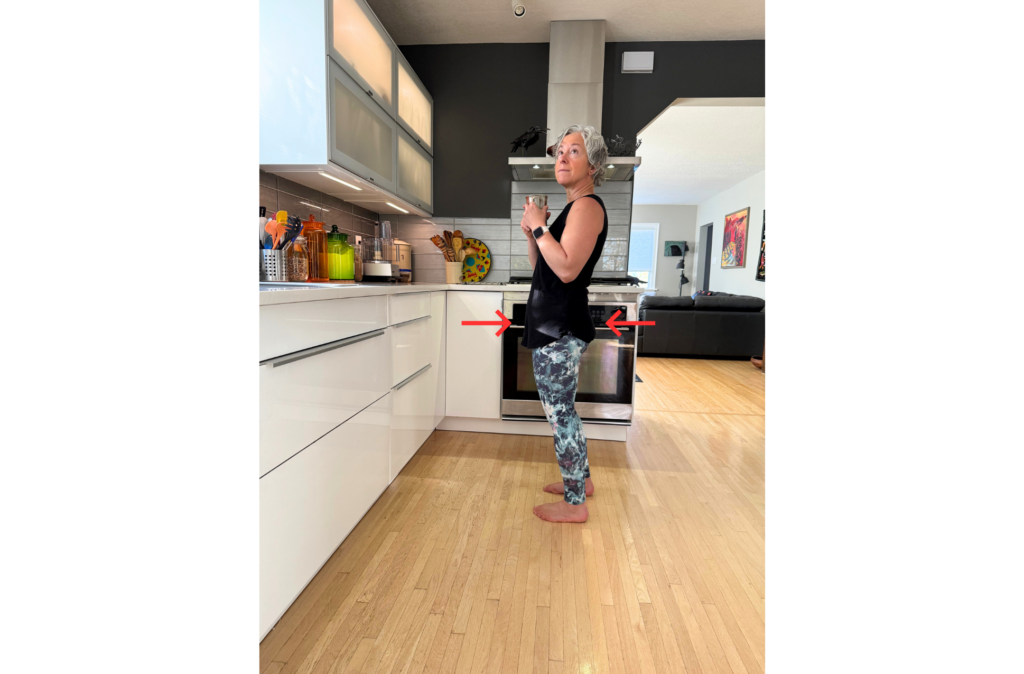
This creates a constant compressive overload on the fronts of our feet — which means yes, the way you’re standing right now could be making your neuroma worse. It’s also a major contributor to plantar fasciitis, bunions, back pain, and pelvic floor dysfunction. That last one surprises people, but it makes sense: when your pelvis is chronically pushed forward, your pelvic floor is constantly shortened and it can’t function the way it’s designed to. It’s all connected.
Ideally, we’d all be standing with our hips stacked vertically over our heels. This lets the big bones of the heel take our body weight, and takes the load off the front of the foot — and the spine, and the pelvic floor.
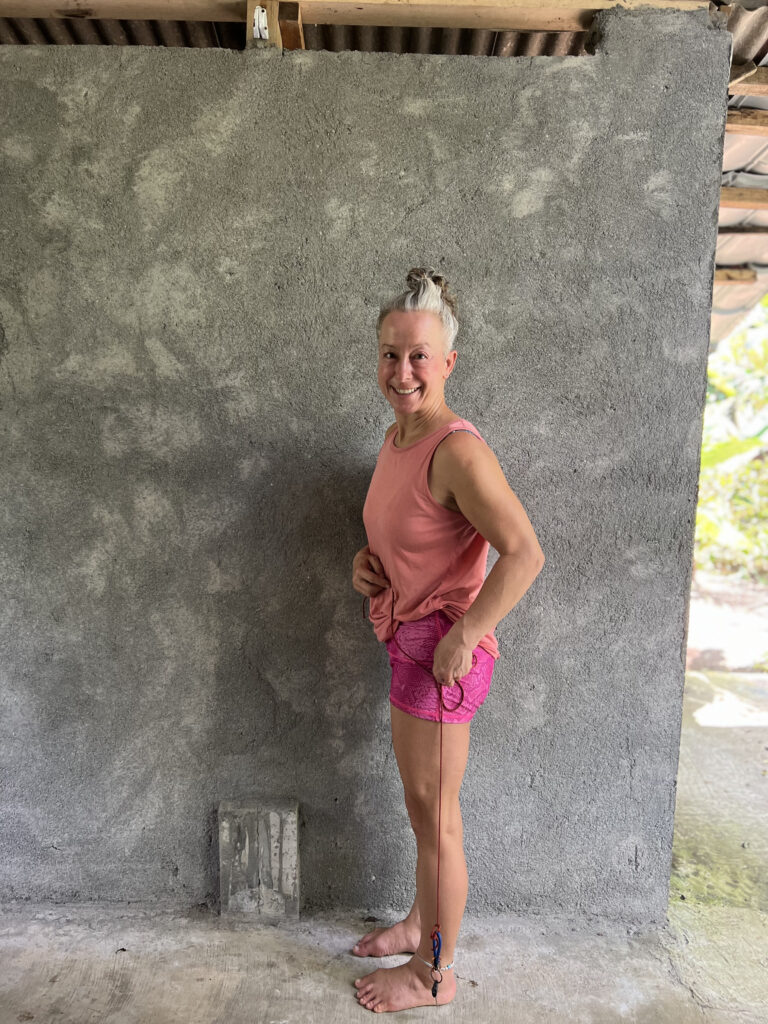
Because we’re so used to our own movement patterns, it can be genuinely hard to tell how you’re standing. This video will help you figure out what your alignment actually looks like:
If you discover you’ve been standing with your hips forward, welcome to the club, it’s a big one. It’s completely normal, and it’s something you can change with time and gentle practice. Don’t try to force yourself all the way back at once. Just make small, incremental changes. Adding exercises to release your hip flexors and lengthen the backs of your legs will speed things up considerably. I teach a lot of these in my Build Better Feet program.
“A few years ago I developed Morton’s neuroma in both feet and honestly thought I’d never walk properly again. The pain and that horrible electric shot were awful. I searched everywhere for help and someone in a neuroma group mentioned Petra. Since then, I’ve never looked back. With her exercises and footwear changes I can now do everything I want. They still tingle after a long hike, but they don’t stop me living the way I want to live.”
Tara K. living the way she wants to live
If compression is the problem, restoring space is the solution. That’s exactly what Free Your Feet is designed to do – it’s a 7-day foot exercise program that will help restore your toe splay and get you on the path to naturally healthier feet. It’s also where I suggest you start.
As you work through Free Your Feet, remember you’re in charge. If anything feels painful, just modify – decrease the range of movement, work around the discomfort, or skip that exercise entirely for now. You can always come back to it as your feet get stronger.
And if you want to go deeper, my Build Better Feet program covers everything — exercises, alignment, footwear, and the whole-body picture. But Free Your Feet is your first step. Start there.