Want happy feet? How about happy knees, hips, low back and even pelvic floor?
Your shoes and feet aren’t the whole story, but if you’re wearing conventional footwear – yep, the same shoes you see every day at the shoe store – you’re accidentally sabotaging your long-term health.
How come? Conventional shoes make your feet stiff, weak and squashed. And that effect transfers to every single step you take, which means the rest of your body has to compensate – which is why our shoes can lead to so many crazy issues that don’t seem foot-related.
#sorrynotsorry – regular shoes seriously suck for your body, and it’s not your fault. But you CAN do something about it.
Transitioning to foot-friendly shoes can literally change your life, and I’ve helped thousands of people make the switch. Foot-friendly shoes basically means shoes that are wide, flat, and flexible – here’s a post with all the details. But it’s not just about getting new shoes – it’s also about making the switch safely and getting the most benefit for your body. Here are my top 9 barefoot shoe transition tips, from my own learning and from my community, so YOU can get the most out of your footwear transition!
Short version: the smoothest barefoot shoe transition comes down to going slow (start around 30 minutes a day and add about 10% a week), choosing a forgiving first pair, and doing foot and hip exercises alongside the shoe change. You don’t have to go fully minimal on day one.
9 Practical Barefoot Shoe Transition Tips
9. It’s not all-or-nothing
A shoe with a wide toe box but lots of cushion can be the best way to start.
“Don’t get sucked into the idea that it has to be totally barefoot shoes or you’ve failed. This is your chance to finally be kind to your feet and let them be free – not force them into sudden change.” – Jane Clayton
Transitional shoes like Altras have toe room but lots of cushion, and are a great choice for many people to start with – and maybe stay with!
8. Start with a cheaper pair
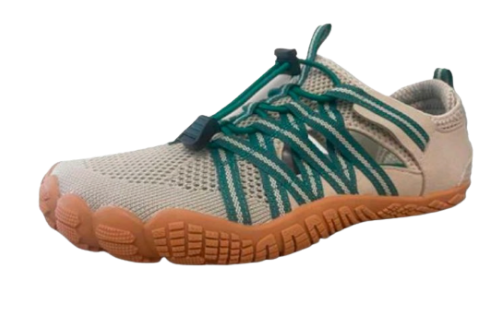
An inexpensive pair helps you figure out your foot shape and what your unique feet really need. Whitin and Saguaro are popular beginner brands (around $35–50 USD), or try second-hand from your local Facebook barefoot shoes B/S/T group. (For more buying specifics, see my top tips for buying minimal shoes.)
7. Follow minimal-shoe reviewers and foot-friendly stores
They’ll give you expert advice on which shoes to pick (and help you find prettier shoes too). Try Anya’s Reviews (USA), Brittany Balinski (UK), Happy Little Soles (UK), Cool East Market (Can) or Barefoot Shoes Australia (Aus) to start.
6. Keep at least two pairs to swap between
One with more cushion, one more minimal – so you can give your feet options depending on your plans! But don’t buy too many at first – I made that mistake and ended up with a bunch of $$$ shoes I couldn’t really wear.
5. Be prepared to let go of your old shoes
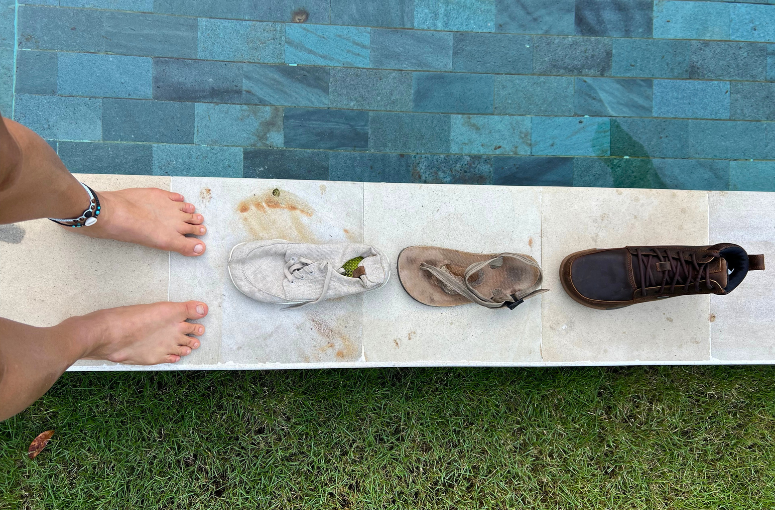
Yeah, this part sucks. I still remember how guilty I felt getting rid of my entire wardrobe of $$$ lawyer shoes. Keep one pair you truly love if you need to (True story – I kept my favourite heels… and still haven’t worn them once). You probably won’t miss them as much as you think.
4. Walk on different textures
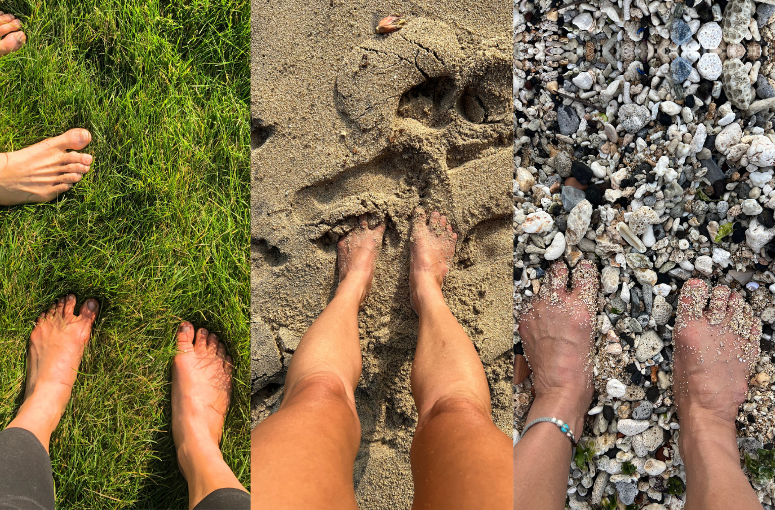
Your new shoes will help your feet get stronger. But if you also walk on different textured surfaces like pebbles and grass, you’ll improve your mobility, strength and balance way faster. Go barefoot sometimes, too – it feels great as you get used to it. Your feet are packed with sensory receptors – give them something to do!
3. Be kind to yourself
If it doesn’t feel right, back off (and do more exercises). This is your chance to listen to your body and learn. Transitioning can be a big change, and overdoing it isn’t going to bring you the wins. I totally overdid it and ended up with an injury I still have years later. (Here’s the full story of my biggest transition mistake.)
2. Do foot, hip and walking exercises
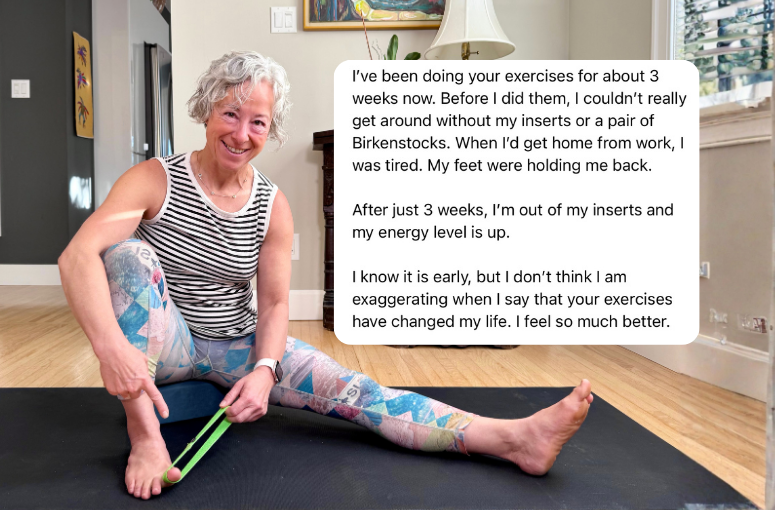
This is the part most people skimp on, and it may actually be the most important. New shoes stop the damage and give your feet the opportunity to change – but exercises prevent future injuries, improve your gait patterns, and help you get the full benefit from your new shoes. My Free Your Feet program is a great starting point!
Build strong, healthy, pain-free feet – for a lifetime!
1. Take it slow
This is the number one tip – don’t rush! There’s no single timeline for everyone, but try around 30 minutes a day for your first week, then add about 10% a week. (This guide has more on timing.)
Fun fact: muscles adapt much faster than connective tissue – so your feet can feel stronger while your tendons and ligaments haven’t caught up yet.
FAQ
Can I wear barefoot shoes if I have high arches? Yes. High, stiff arches struggle to absorb shock, so minimal shoes can feel harder at first. But that’s a mobility issue, not a reason to avoid them. Do daily foot mobility work (mobility on a ball – not rolling – and pronation practice) for a couple of weeks before and during your transition. Long term, your knees will thank you. Free Your Feet will also be on point.
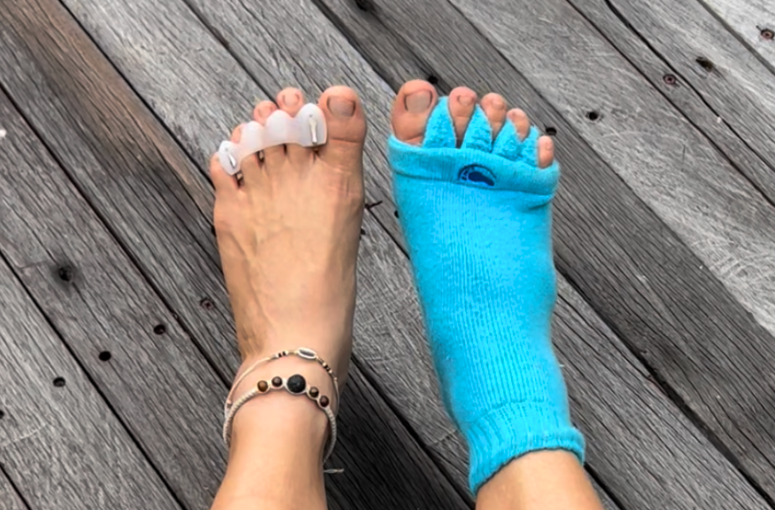
Do I need toe spacers to transition? Toe spacers aren’t required, but they can encourage toe splay and better foot mechanics. Best used alongside the shoes and exercises, not instead of them. Here’s everything you need to know about toe spacers.
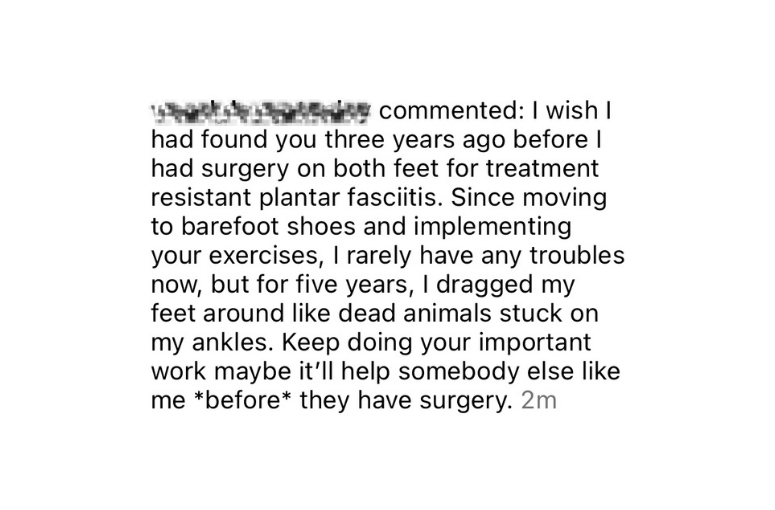
Can I switch to barefoot shoes if I have bunions or plantar fasciitis? In most cases, yes, and the foot work matters even more here. Minimal shoes give your feet room to move, but targeted exercises are what help them actually heal. Go slower than you think you need to. My Build Better Feet programme is built for exactly this.
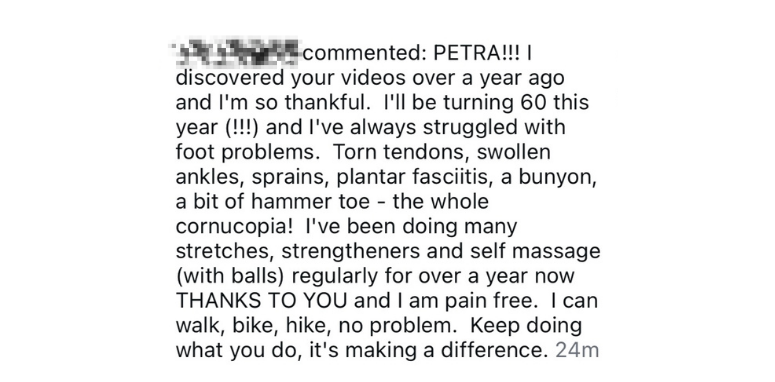
Are barefoot shoes safe for me? For almost everyone, yes (and actually better for most feet – as long as you transition carefully). A few exceptions where a bit more shoe is the wiser choice:
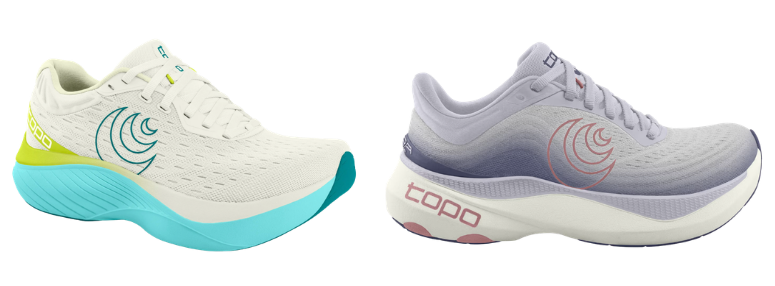
Stiff, arthritic big toe (hallux rigidus): you’ll want a thicker sole with a little toe spring – try Topo (Atmos or Aura)
Extensive osteoarthritis in your feet: a firmer, cushioned sole is comfier – try Altra (Torin) or Topo (Atmos or Aura).
Very hypermobile: loose joints often do better with more structure and support, plus foot strengthening. Check with your physio.
And if you have diabetes or reduced sensation in your feet (a firm no with Charcot foot), an active flare (RA, gout, plantar fasciitis, Achilles), or a recent stress fracture – check with your foot professional first, and as always – don’t rush it!
Moving Forward
A smooth transition to barefoot shoes isn’t about swapping your footwear – it’s about giving your feet the time and support they need to adapt.
Keep these 3 key habits in mind:
- Always listen to your body,
- Build up gradually, and
- Make foot work part of your routine
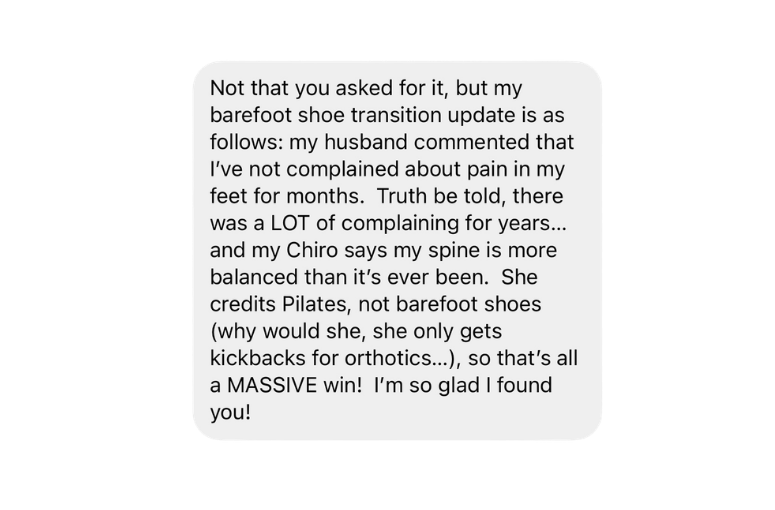
You’ll end up with feet that are stronger and more capable than before – and your whole body will feel better and function better too!
If you want a guided place to start, I built my Free Your Feet program for exactly this.